
Day Porter vs. After-Hours Janitorial Service in Sacramento
Choosing between a day porter vs. after-hours janitorial service depends on what happens inside your property during business hours. A day porter handles visible problems as they develop, while an after-hours crew completes routine cleaning when employees, tenants, and customers have left. Busy Sacramento properties often need some daytime attention, but quieter offices may receive everything they need through scheduled evening service.
At Custom Cleaning Services, we build commercial cleaning plans around the facility, its operating schedule, and the areas that need consistent attention. The right choice starts with a close look at traffic, restroom use, customer expectations, access requirements, and how quickly the property changes throughout the day.
What Does a Day Porter Do?
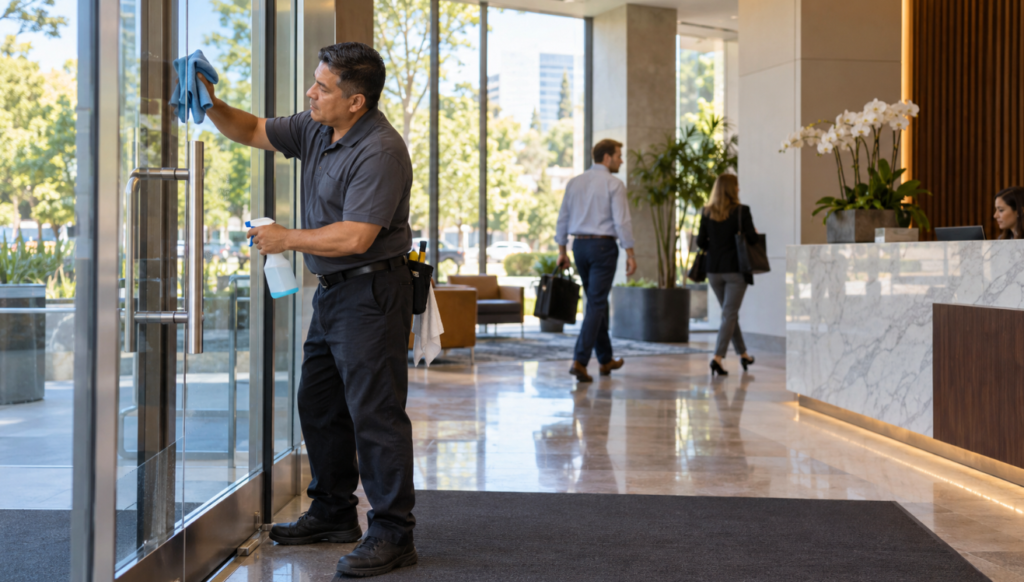
A day porter works in a commercial property while the building is open. The exact responsibilities vary by facility, but the role usually focuses on upkeep, quick response, and highly visible areas.
Typical daytime responsibilities may include:
- Checking and restocking restrooms
- Responding to spills
- Emptying full waste containers
- Removing debris from entrances
- Cleaning fingerprints from door glass
- Checking lobbies and shared spaces
- Straightening common areas
- Reporting maintenance concerns
- Monitoring high-traffic floors
- Preparing rooms between meetings or events
This type of service works best for tasks that can’t wait until the end of the day. If a restroom runs out of supplies at noon or a customer spills a drink near the entrance, an evening cleaning crew won’t solve the immediate problem.
A porter usually maintains the property rather than performing every detailed janitorial task during open hours. Vacuuming an active hallway, deep-cleaning a restroom, or completing extensive floor care may create too much noise or interfere with normal operations. Those jobs often remain on the after-hours schedule.
What Does After-Hours Janitorial Service Include?
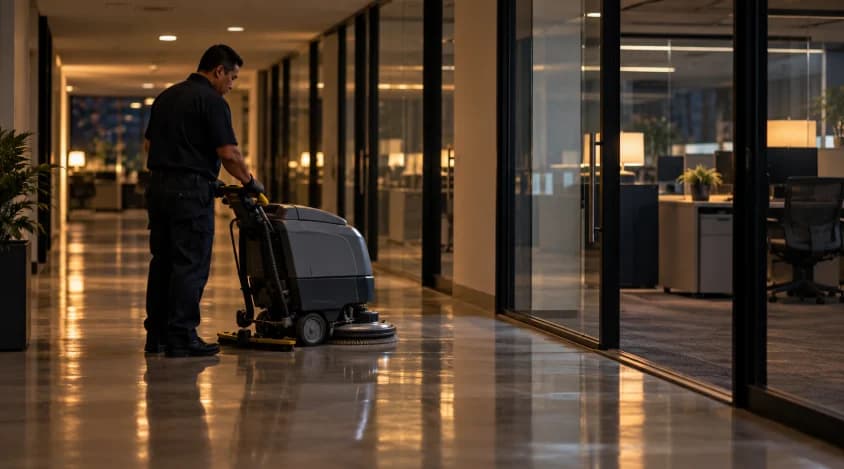
After-hours janitorial service takes place when the property is closed or significantly less active. The quieter environment gives the crew better access to offices, hallways, restrooms, conference rooms, and common areas.
Depending on the agreed scope, evening service may cover:
- Trash and recycling removal
- Vacuuming and mopping
- Restroom cleaning and sanitation
- Break room cleaning
- Dusting accessible surfaces
- Interior glass touch-ups
- Cleaning shared spaces
- Restocking agreed-upon supplies
- Completing scheduled floor care
Custom Cleaning Services provides commercial janitorial services for Sacramento offices, managed properties, facilities, and shared commercial spaces. Our plans define the areas included, the frequency of service, and the expectations for follow-up.
Evening cleaning usually allows the crew to work more efficiently because furniture, employees, customers, and deliveries aren’t moving through the same areas. Floors also have time to dry before the building becomes active again.
Day Porter vs. After-Hours Janitorial Service for Different Properties
Neither schedule works equally well for every building. The property’s daily activity should drive the decision.
Office Buildings
A small professional office with limited visitor traffic may only need after-hours service several times per week. Employees arrive to clean floors, empty waste containers, and refreshed restrooms without cleaning activity interrupting their workday.
Larger office buildings face different demands. Shared restrooms, busy lobbies, elevators, break rooms, and common corridors can change considerably between morning and late afternoon. Daytime checks may make sense for those areas, while detailed cleaning remains on an evening schedule.
Multi-tenant properties also need clear responsibility. A porter may oversee the shared entrance and common restrooms while an after-hours team handles individual suites according to the building’s service agreement. Our guide to cleaning multi-tenant office buildings explains how separating common areas from tenant spaces prevents gaps.
Shopping Centers and Customer-Facing Properties
Shopping centers, retail properties, and other public-facing facilities often need daytime support because visitors continually affect the space.
A restroom that looks clean before opening may need supplies, waste removal, and surface attention by lunchtime. Storefront entrances collect fingerprints and tracked-in debris throughout the day. Food, drinks, deliveries, and weather create problems that require a quick response.
After-hours janitorial work still matters. Once customer traffic slows, the crew can address floors, detailed restroom cleaning, waste removal, and areas that aren’t practical to clean while the property is busy.
For these buildings, a blended schedule often makes the most sense. Daytime service keeps visible areas under control. Evening cleaning resets the property for the next business day.
Low-Traffic Commercial Facilities
A quiet administrative office, small professional building, or limited-access facility may not need a dedicated daytime presence. If restrooms remain orderly and waste containers don’t fill during operating hours, after-hours service may provide better use of the cleaning budget.
The property still needs someone internally responsible for spills and urgent issues that happen before the cleaning team arrives. Managers should identify who handles those situations rather than assuming they will wait until evening.
When Daytime Janitorial Support Makes Sense
Daytime coverage becomes valuable when the condition of the property changes quickly.
Look at what happens between opening and closing. If the facility consistently looks good in the morning but deteriorates by early afternoon, the current schedule may not match its actual use.
Daytime support may be appropriate when:
- Restrooms require multiple checks each day
- Customers regularly use the facility
- Waste containers fill before closing
- Deliveries bring debris through common areas
- Spills require prompt attention
- Entrances collect heavy foot traffic
- The building hosts frequent meetings or events
- Several tenants share lobbies and restrooms
- Property management needs visible cleaning coverage
The Occupational Safety and Health Administration’s walking-working surfaces standard requires workplace floors and passageways to remain clean, orderly, sanitary, and as dry as feasible. A cleaning provider doesn’t replace a property’s complete safety program, but a clear process for spills, wet floors, and reported hazards supports better daily facility management.
When After-Hours Cleaning Is the Better Fit
After-hours janitorial service usually works well when uninterrupted access matters more than an immediate daytime response.
Employees often prefer vacuuming, waste collection, and restroom cleaning to happen outside their working hours. Evening service also reduces conflicts in conference rooms, private offices, reception areas, and break rooms.
Choose an after-hours schedule when:
- The building has predictable occupancy
- Visitor traffic remains low or moderate
- Restrooms stay manageable throughout the day
- Cleaning equipment would interrupt work
- Secure rooms require coordinated access
- Floors need time to dry
- Most cleaning needs are routine rather than urgent
Access procedures need careful planning. The cleaning scope should document approved service hours, alarm instructions, keys, restricted rooms, and the person authorized to request changes.
Our employees are background checked, uniformed, and identified. We also use clock-in and clock-out tracking, inspections, work orders, completed-work photos, customer follow-up, and direct communication to keep service accountable.
Those systems matter after hours, when a property manager may not personally see the crew working. Verification gives the customer a clear record of service and a direct way to address questions.
Why Many Properties Need a Combined Schedule
A choice between daytime and evening cleaning doesn’t have to be absolute. Some properties need targeted attention during business hours and complete janitorial service after closing.
For example, a multi-tenant office building might schedule daytime checks for its lobby, shared restrooms, entrance glass, and waste stations. The evening crew could then clean tenant suites, vacuum corridors, mop hard floors, and complete detailed restroom work.
This approach gives the busiest areas a shorter service interval without trying to complete disruptive cleaning during operating hours.
Specialty services should remain on separate schedules. Commercial window cleaning, carpet cleaning, pressure washing, and detailed floor work don’t necessarily belong on the daily porter or evening janitorial checklist. Scheduling them in advance prevents long-term buildup from becoming an urgent request.
Compare the Cost by Scope, Not Job Title
The words “day porter” and “night cleaning” don’t tell you enough to compare proposals.
One provider may quote a daytime employee for several hours, while another may include short daytime checks as part of a broader plan. Evening proposals can also vary in the number of visits, included rooms, supply responsibilities, and periodic tasks.
Ask each cleaning company to identify:
- Which areas are included
- What tasks occur during each visit
- How long or how often service occurs
- Which tasks happen during business hours
- What remains on the evening schedule
- Who handles consumable supplies
- How completed work is verified
- How spills or urgent requests are communicated
- Which specialty services require separate approval
A lower proposal may leave important areas outside the scope. A detailed plan makes it easier to see what the property will actually receive.
How to Choose the Right Cleaning Schedule
Walk through the property at several points during the day. A morning inspection alone won’t show what happens after lunch, during deliveries, or near closing.
Check the entrance, restrooms, common spaces, waste containers, break areas, and busiest walking routes. Note when each area begins to look neglected. Staff complaints, tenant requests, and recurring work orders also reveal where the schedule falls short.
Then separate immediate daytime needs from work that can wait until the property closes. Spills, full trash containers, empty restroom dispensers, and visibly dirty entrances usually belong in the first category. Detailed floor care, full-office vacuuming, and routine cleaning often fit the second.
At Custom Cleaning Services, we don’t rely on a generic checklist for every property. We review the facility, schedule, service needs, and customer expectations, then create a defined commercial cleaning plan backed by inspections and documented follow-through.
If your Sacramento property needs more consistent janitorial support, request a commercial cleaning quote. Tell us where problems develop, when the building is busiest, and which areas need the closest attention. We’ll review the scope and schedule needed to keep the facility consistently clean.

 Local Commercial Cleaning