

What Does a Commercial Cleaning Company Handle That Regular Office Staff Shouldn’t?
A commercial cleaning company should handle recurring, scope-defined cleaning tasks that take time, require cleaning products or equipment, or need consistent follow-up. Regular office staff shouldn’t be expected to use unfamiliar chemicals, operate floor-care equipment, clean potentially hazardous spills, or take on repair work without the right training and assignment. At Custom Cleaning Services, we work with Sacramento offices and commercial properties to set clear expectations for janitorial work and facility communication.
That boundary doesn’t mean staff should ignore a spill or leave a shared space untidy. Employees can take care of ordinary workplace habits, such as keeping personal desks orderly and reporting a problem. The cleaning plan should say which tasks the janitorial team handles, which responsibilities stay with the business, and who responds when something falls outside routine cleaning.
What Commercial Cleaning Company Responsibilities Usually Include
A commercial cleaning company handles the work listed in its agreed service scope. That may include recurring cleaning in offices, common areas, and managed properties. The exact tasks and schedule depend on the facility and the agreement.
Custom Cleaning Services provides commercial janitorial programs for Sacramento offices, facilities, common areas, and managed properties. Our other listed services include carpet cleaning, window cleaning, pressure washing, and restroom sanitation. The scope should make clear which of these services are included and how often the work happens.
A useful plan identifies:
- The rooms and shared spaces included
- The tasks assigned to each visit
- The service schedule
- Any areas that require special access
- How the team reports maintenance concerns or incomplete work
If the plan says “clean the office,” both the staff and provider may interpret that differently. A written list of spaces and duties gives everyone a clearer point of reference. Our guide to planning a janitorial service transition covers how to document areas, access, schedules, and follow-up.
Cleaning Tasks Office Staff Shouldn’t Be Expected to Take On
Handling unfamiliar or concentrated cleaning chemicals
Office staff shouldn’t be asked to mix or use unfamiliar cleaning products without training and clear directions. Products can have different handling, dilution, ventilation, and protective-equipment requirements. OSHA’s Hazard Communication Standard explains employers’ responsibilities for communicating chemical hazards to workers.
Keep cleaning products in their original labeled containers, and don’t mix products unless the label specifically directs it. If a spill or odor raises questions about a chemical, follow the workplace’s safety procedures and contact the designated person rather than asking an employee to investigate by trial and error.
Operating floor-care equipment without training
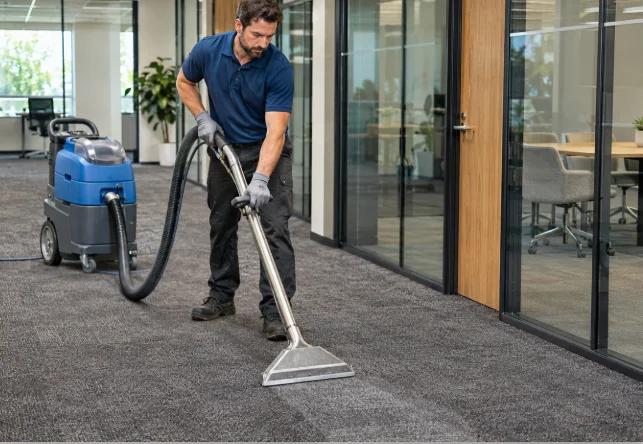
Commercial floor machines and cleaning tools require more than a quick demonstration. An employee who hasn’t been trained may damage the floor, create a trip or slip hazard, or use the equipment incorrectly. Assign floor-care work through the cleaning plan or to a trained person responsible for that equipment.
The same principle applies to work that involves moving heavy furniture or reaching high areas. Staff shouldn’t climb on chairs or shift heavy objects just to clean behind or above them. Decide in advance whether the area belongs in routine service, needs separate scheduling, or requires another qualified worker.
Cleaning potentially hazardous spills
A routine beverage spill and a spill involving bodily fluids or an unknown substance aren’t the same task. Staff should know how to report the issue and keep people away from the area while the responsible person follows the workplace’s response procedures. Don’t assume routine janitorial service includes hazardous-material or biohazard cleanup; check the written scope and escalation plan.
A cleaning provider also shouldn’t be treated as a substitute for emergency response or specialized remediation. The facility manager should identify who to call when a situation requires more than the agreed cleaning work.
Performing repairs or maintenance
Cleaning crews may notice a leak, loose fixture, or damaged surface, but routine cleaning doesn’t automatically include repairing it. Custom Cleaning Services lists light building maintenance support, including basic fixture and bulb changes. Larger repairs should go to the appropriate maintenance professional or trade.
Office staff shouldn’t be asked to take apart plumbing, repair electrical fixtures, or improvise a fix because the problem appeared during a cleaning shift. Give staff a clear way to report what they see and assign the repair to the person responsible for it.
What Office Staff Can Do Between Cleaning Visits
Staff still play a role in keeping a workplace usable. They can put away personal items, dispose of food and drink containers, report full bins or supply shortages, and notify a manager about spills or damage. These habits help the cleaning team follow the agreed plan, but they don’t replace scheduled janitorial work.
Set expectations around shared spaces, too. Employees can leave a break room ready for the next person by clearing personal dishes and reporting a mess. The cleaning scope can then define which routine tasks belong to the cleaning crew and when those tasks happen.
A straightforward reporting process prevents small concerns from getting lost. Ask employees to share the location, what they noticed, and when it happened. A manager can then decide whether to notify the janitorial contact, maintenance, or another responsible person.
Clarify the Boundary in the Cleaning Scope
A cleaning agreement should answer practical questions before service begins. Does the crew clean private offices or only shared areas? Who supplies restroom products? How should staff report an urgent spill during business hours? Which tasks happen during routine visits, and which require separate approval?
These details matter in multi-tenant buildings and shared facilities, where one business may handle its own suite while management oversees common areas. Without clear boundaries, employees can end up doing tasks they assumed were covered, while the cleaning provider may not know an area needs attention.
Custom Cleaning Services uses inspections, work orders, completed-work photos, customer follow-up, and direct communication to keep customers informed about janitorial service. The written scope and follow-up process give managers a way to raise specific questions and track what happens next.
Match Cleaning Work to the Facility
A small office with predictable occupancy may need a different service plan from a busy property with shared restrooms and common areas. Walk the building and note where dirt builds up, which spaces see the most traffic, and when employees notice issues. Then compare those observations with the current service schedule and scope.
Separate routine cleaning from tasks that need a specialist or maintenance professional. That makes it easier for office staff to report problems without being expected to solve them, and it gives the cleaning provider clear instructions about its responsibilities.
At Custom Cleaning Services, we work with Sacramento-area offices, commercial properties, facilities, and managed spaces. If you’re reviewing what your staff handles versus what belongs in a janitorial plan, contact our team with the areas you need covered, the service schedule, and any recurring concerns. Those details give us a practical starting point for discussing the scope.

 Local Commercial Cleaning