
Commercial Pressure Washing: How Often Should Walkways and Building Entrances Be Cleaned?
A practical commercial pressure washing frequency for walkways and building entrances is every three to six months. However, high-traffic properties, food-service areas, shaded concrete, and entrances exposed to irrigation or heavy debris may need monthly or quarterly service. A quieter office entrance may only need cleaning once or twice a year. The right schedule depends on how quickly dirt, grease, organic growth, and stains return.
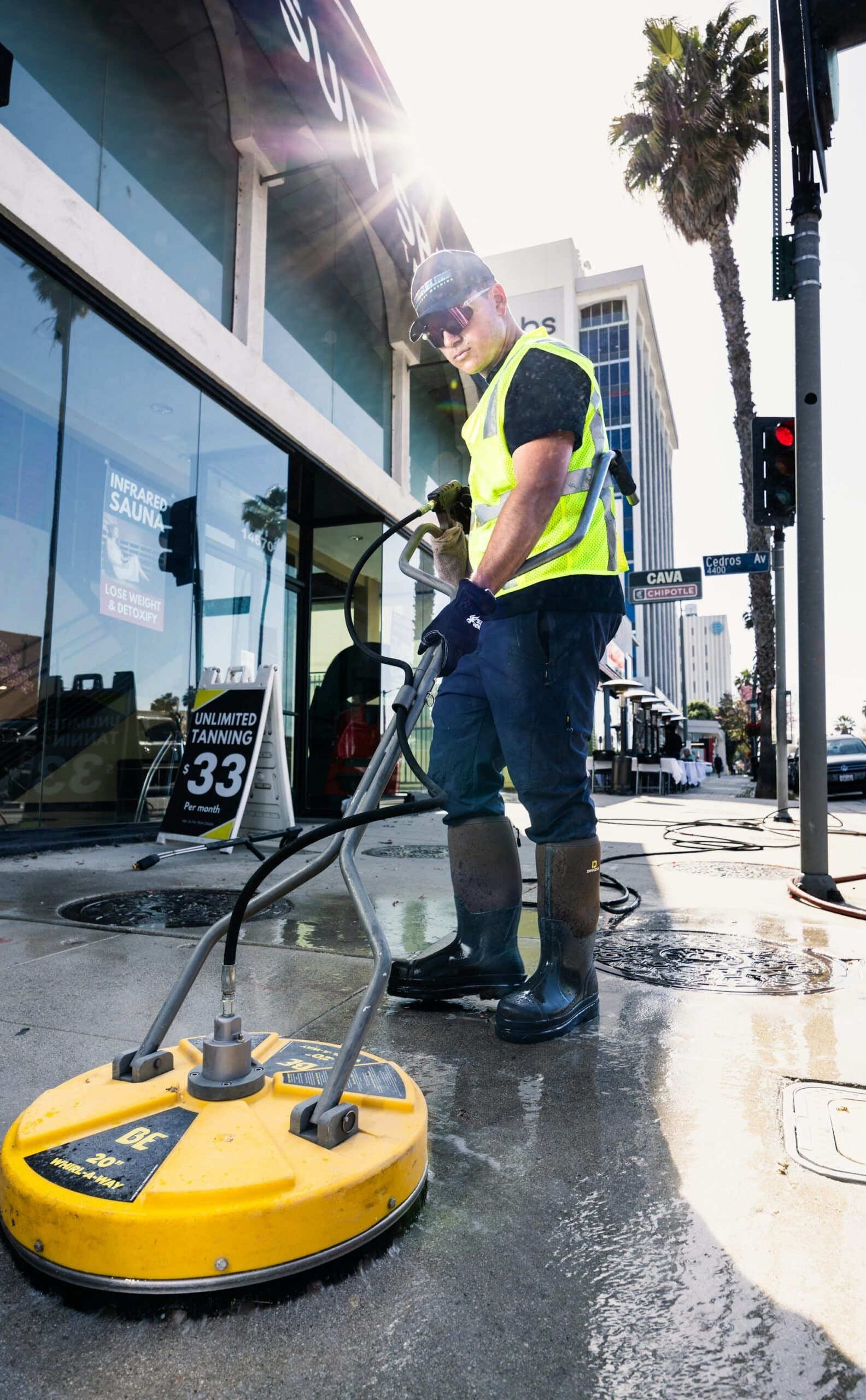
Custom Cleaning Services handles exterior pressure washing for Sacramento commercial properties, including walkways, entrances, hard surfaces, and other customer-facing areas. For property managers, the goal is to keep the entrance consistently presentable rather than waiting until the buildup becomes difficult to ignore.
A Practical Commercial Pressure Washing Frequency
There is no universal schedule that fits every commercial property. A useful starting point is to place the building into a general service range, then adjust the timing after one or two cleaning cycles.
Busy retail centers, restaurants, medical buildings, and multi-tenant properties may need walkway and entrance cleaning every one to three months. These sites often collect gum, beverage spills, food residue, tire marks, and debris around doors and curb approaches.
Moderate-traffic office buildings and professional properties often fit a three- to six-month schedule. The entrances may stay cleaner than a retail walkway, but soil still gathers around mats, thresholds, planters, shaded walls, and common paths.
Low-traffic buildings may only need pressure washing every six to twelve months. Managers should still inspect the property between scheduled visits. An irrigation problem, dumpster spill, construction project, or leaking vehicle can create a cleaning need that has nothing to do with the normal calendar.
These ranges are starting points. The property’s actual condition should determine the final schedule.
Foot Traffic Is Only Part of the Decision
The number of people entering a building matters, but it is not the only source of exterior buildup. Two properties with similar visitor counts can require very different cleaning frequencies.
A covered entrance may stay damp longer after irrigation or rain. A walkway beneath trees can collect sap, bird droppings, leaves, and dark organic staining. Concrete near restaurants may develop grease spots around delivery routes and waste areas. Parking-lot approaches often collect vehicle residue that is tracked toward the doors.
Pay attention to places where people stop rather than simply pass through. Areas near benches, exterior trash cans, smoking locations, pickup zones, and vending machines often show staining sooner.
The best schedule maps these recurring trouble spots instead of treating every square foot the same.
Signs the Property Needs Pressure Washing Sooner
A property does not have to look severely neglected before the schedule should be changed. Earlier service is usually warranted when:
- Dark traffic patterns remain after sweeping
- Gum and sticky residue are accumulating near doors
- Concrete develops visible organic growth
- Food, grease, or beverage stains remain after spot cleaning
- Curbs and building edges look darker than surrounding surfaces
- Tenants or customers begin commenting on the entrance
- Inspection photos show a noticeable decline between visits
Some conditions should be handled as a specific spill or cleanup rather than waiting for the next full-property service. Grease near a restaurant, leaking waste containers, paint, and unidentified residue may need separate treatment.
Surface Material Changes the Cleaning Plan
Commercial pressure washing frequency should not be chosen without considering the surface itself. Concrete is common around commercial entrances, but its age, finish, repairs, coatings, and existing damage all affect how it should be cleaned.
Sound concrete may tolerate a different process than an older slab with cracks or loose surface material. Decorative concrete, pavers, painted areas, coated walkways, stucco edges, wood, and masonry joints require more caution. Higher pressure is not automatically better.
Before cleaning, the provider should identify damaged sections, failing coatings, open joints, loose materials, and areas where water could enter the building. Water pressure, cleaning solution, distance from the surface, and technique should match both the material and the type of buildup.
Regular cleaning with an appropriate method is often better than allowing heavy staining to develop and then relying on an aggressive process.
Entrances May Need More Attention Than Other Walkways
The main entrance represents a small portion of the property, but it usually deserves the shortest cleaning interval. It is where outdoor dirt, floor mats, glass doors, landscaping, and indoor flooring meet.
A full pressure washing visit might cover all designated exterior walkways several times per year, while the main entrance receives additional targeted service between those visits. That split schedule keeps the most visible part of the property under control without cleaning every exterior surface equally often.
Pressure washing also works best as part of a broader entrance-maintenance plan. Commercial window cleaning addresses fingerprints, dust, and spotting on doors and nearby glass. Recurring janitorial services handle interior floors, mats, and common areas.
Cleaning the concrete while leaving dirty glass and a worn interior threshold may not produce the improvement the property manager expects.
Seasonal and Property Changes Should Trigger a Review
A schedule that worked last year may no longer suit the property. New tenants, longer operating hours, added outdoor seating, nearby construction, landscaping changes, and increased deliveries can accelerate exterior buildup.
Review the cleaning frequency after major occupancy changes and before periods when visitor traffic is expected to rise. Entrances should also be inspected after storms, exterior repairs, painting, roof work, or landscape projects. Mud, dust, sealants, and construction debris can spread quickly onto customer walkways.
Consider whether a condition is temporary before permanently increasing the service frequency. A one-time cleanup may be enough after construction. A recurring irrigation stain points to an ongoing issue that may require both cleaning and a maintenance correction.
Pressure Washing Runoff Has to Be Managed
Commercial pressure washing is not simply a matter of spraying a surface and allowing the water to flow toward the nearest drain. Cleaning can loosen dirt, oil, food residue, paint particles, and other pollutants.
Sacramento County’s stormwater pressure-washing guidance states that pressure washing wastewater should not be discharged into a storm drain. Its guidance discusses blocking drains, collecting the wastewater, and using an appropriate disposal method with the property owner’s permission.
Before work begins, the cleaning plan should account for storm drains, slope, nearby landscaping, pedestrian access, and where collected water will go. This is especially relevant around parking lots, restaurant areas, waste enclosures, and older properties where runoff paths may not be obvious.
Property managers should ask how wastewater will be contained and handled rather than assuming that detail is covered.
How to Set the Right Schedule for Your Property
Begin with a walkthrough of the busiest entrance and the surfaces that stain fastest. Note the flooring material, shade, nearby waste areas, irrigation, food-service activity, traffic patterns, and existing surface damage.
Choose an initial frequency based on those conditions. A manager might schedule full walkway cleaning every four months while inspecting the main entrance monthly. If staining becomes visible well before the next appointment, shorten the interval. If the property remains consistent, the original schedule may be sufficient.
Take photos from the same locations during each inspection. Consistent photos make it easier to determine whether a recurring problem comes from cleaning frequency, drainage, landscaping, tenant activity, or building maintenance.
The service scope should state which walkways, entrances, curbs, walls, and exterior areas are included. It should also identify access times, pedestrian controls, water availability, and how unusual stains or additional work will be approved.

Commercial Pressure Washing in Sacramento
Custom Cleaning Services provides commercial pressure washing for Sacramento-area properties, including walkways, entrances, hard surfaces, and other exterior commercial areas. The company also supports facilities through janitorial cleaning, window cleaning, carpet care, restroom sanitation, and light building-maintenance tasks.
For many properties, inspecting entrances monthly and scheduling pressure washing every three to six months is a reasonable starting point. Increase the frequency where traffic, shade, food residue, landscaping, or recurring stains cause faster buildup. Extend the schedule only when inspections show that the surfaces remain consistently clean.
Property managers can request a commercial cleaning quote based on the surfaces that need attention, the property’s operating schedule, and the conditions affecting its exterior. A site-specific plan is more useful than choosing a frequency from square footage alone.
 Local Commercial Cleaning